If you’ve been searching for EVCO House of Hose, you’ve come to the right place.
The EVCO House of Hose name has a long history in Utah, especially throughout the Salt Lake City region. Today, that legacy continues as LGG Industrial, providing customers fluid handling, material conveyance and sealing solutions.
From EVCO House of Hose to LGG Industrial
For decades, EVCO House of Hose built a strong reputation in Utah as a trusted source for hose, fittings, and related industrial products.
In 2011, EVCO House of Hose was acquired by Lewis-Goetz, bringing EVCO’s established local presence and customer relationships together with the capabilities of a larger industrial distribution organization. Over the years, the organization continued to evolve, eventually becoming part of what is now LGG Industrial.
While the name has changed, our commitment to serving customers in Utah has not.
Continuing the EVCO Legacy in Utah
LGG Industrial is proud to carry forward the history, industry knowledge, and customer relationships associated with EVCO House of Hose.
Today, our teams support customers across a wide range of industries with industrial and hydraulic hose and assemblies, fittings, gaskets, conveyor belting, valves, and more. Beyond products, we provide value-added services including hose management and testing, vendor managed inventory (VMI), and training programs—all designed to help customers improve safety, reliability, and operational efficiency.
Our capabilities have grown, but our focus remains the same: providing knowledgeable local support and helping customers find the right solutions for their applications.
EVCO House of Hose may be the name you remember. LGG Industrial is the partner carrying that legacy forward.
Connect With LGG Industrial in Utah
Looking for your former EVCO House of Hose location, need a quote, or have a product question?
Visit our Utah locations or contact LGG Industrial to connect with our local team.
We’re proud to continue serving the customers and communities that have known EVCO House of Hose for years—now as LGG Industrial.
Every hose has a job to do. But when a hose is improperly selected, installed, inspected, or maintained, it can become more than an operational concern—it can become a safety risk.
That’s why hose safety is a year-round priority at LGG Industrial.
Hose Safety Awareness Month, led by NAHAD, puts a spotlight on the practices that help protect employees, customers, and facilities. The month-long initiative emphasizes safe hose selection, fabrication, installation, inspection, and preventive maintenance—all practices that should remain top of mind throughout the year.
Building Safety Into the Hose Life Cycle
At LGG Industrial, our commitment goes beyond supplying the right hose. We work with customers to help manage hose assets throughout their life cycle, from proper selection and installation to inspection, testing, and training.
Our hose management capabilities include on-site hose audits, hose testing and recertification, asset tracking and management, and employee education and training programs. These services can help organizations better understand the condition of their hose assets, establish preventive maintenance programs, identify potential issues, and reduce the risk of hose-related incidents.
Our Commitment to Hose Safety
LGG Industrial has pledged its commitment to hose safety.
From selecting the right assembly to knowing when it’s time to take one out of service, every decision matters.
We’re proud to announce that LGG Industrial has been ranked #5 on Modern Distribution Management’s (MDM) 2026 Top Hose & Accessories Distributors List, placing us among the largest hose solution providers in North America.
This recognition reflects more than our growth, it represents the trust our customers have in us and the dedication of our associates across North America, whose expertise and commitment drive exceptional service every day.
A Leader in Hose Solutions
LGG Industrial’s Fluid Transfer and Fluid Power solutions go beyond products to help customers maximize uptime and performance. Through hose management programs, testing and certification, reclamation services, inventory management, and more, we help customers reduce risk, extend hose life, and improve operational efficiencies.
Whether supporting a refinery turnaround or a mining operation in the field, our teams provide the technical expertise and responsive service needed to keep critical systems moving.
More Than Just a Hose Distributor
LGG Industrial provides a wide range of quality products and solutions across numerous industries. Our expertise spans fluid transfer, fluid power, sealing and material handling solutions, allowing customers to work with a single trusted partner for many of their most critical applications.
Whatever your industrial challenge, LGG Industrial has the tailored solutions and trusted service you need. Contact us today to learn how our team can support your business.
When it comes to anhydrous ammonia hose, a warranty is more than just a number. It’s a reflection of the manufacturer’s confidence in the product’s design, materials, and long-term performance.
That’s why Goodall backs its NH₃ hose lineup with some of the longest warranties in the industry:
While competing NH₃ hoses offer only 5- or 7-year warranties, Goodall continues to set the standard for durability and reliability in the field.
Our longer warranties are a result of intentional engineering and the use of high-quality materials designed specifically for the demanding conditions associated with anhydrous ammonia transfer.
From premium rubber compounds and chlorobutyl tube technology to stainless steel braided reinforcement, Goodall’s NH₃ hose lineup is engineered for long-term performance and reliability. Design features like these allow Goodall to confidently stand behind its products with these industry-leading warranties that help operators reduce risk and maximize their investment.
With warranties of up to 10 years and a reputation for proven field performance, Goodall delivers the durability and reliability today’s operators demand.
View Goodall’s anhydrous ammonia hose here: https://goodallhoses.com/products/anhydrous-ammonia/
When it comes to handling Anhydrous Ammonia, the hose you choose shouldn’t be an afterthought — it’s a critical component of your system that could become the weakest link if not selected carefully. The inner tube material is a key part of NH₃ hose performance, and that’s where chlorobutyl stands apart.
Chlorobutyl is a low-permeation synthetic rubber that is resistant to Anhydrous Ammonia and is used to prevent gas from seeping through the hose wall. This matters because NH₃ is used under pressure and can permeate through lower-quality materials, causing potential hose cover blistering and delamination, as well as contributing to excess ammonia vapor and exposure around equipment.
Using a hose with a chlorobutyl tube significantly reduces permeation, keeping the NH₃ where it belongs — in the hose. Less permeation means better hose integrity, contributing to a longer, and more dependable service life during your critical application seasons.
LGG Industrial is the exclusive distributor of Goodall Anhydrous Ammonia hose, the only NH3 hose in the market built with a chlorobutyl inner tube. View our full NH3 hose offering: https://info.lggindustrial.com/goodall-nh3?utm_content=371875233&utm_medium=social&utm_source=linkedin&hss_channel=lcp-17887348
At industry events like AFPM, one topic continues to rise to the surface: emissions reduction. While regulations and expectations continue to evolve, one challenge remains—there is no universal EPA emissions standard for gasket and sealing products.
So how can refineries and petrochemical facilities confidently reduce fugitive emissions?
At LGG Industrial, we believe the answer lies in a combination of engineering expertise, proven solutions, and proper installation practices.
Without standardized benchmarks, many products are marketed as “low emission” without measurable data to support those claims. This creates uncertainty for operators who are under pressure to improve environmental performance while maintaining reliability.
That’s where experience matters.
LGG Industrial works closely with customers to evaluate their specific applications and recommend sealing solutions that deliver real, measurable results—not just marketing promises.
In one case, a large California refinery approached LGG Industrial with a fugitive emissions issue exceeding 500 ppm—well above acceptable thresholds.
Rather than simply meeting compliance, the refinery set an aggressive goal: reduce emissions to 10 ppm.
Through close collaboration, LGG developed a specialized sealing solution that evolved into the HDLE (High Density Low Emissions) gasket. The result?
Emissions were reduced to just 5 ppm—cutting well below the target and demonstrating the power of engineered solutions.
While product selection is critical, it’s only one part of the equation.
Proper installation, bolting techniques, and overall flange management play a significant role in long-term sealing performance. Even the best gasket can fail if it’s not installed correctly.
That’s why LGG Industrial supports customers with:
With in-house manufacturing capabilities through Leader Gasket and Advanced Sealing, LGG Industrial delivers more than just products—we provide custom-engineered solutions designed for real-world operating conditions.
Combined with decades of experience and a proactive service approach, we help customers:
Reducing emissions isn’t about chasing labels—it’s about applying the right solution, the right way.
At LGG Industrial, we partner with customers to do exactly that.
In the demanding world of industrial operations—whether in oil & gas, refining, power generation, chemical processing, or agriculture—flange joint integrity is paramount. Ensuring consistent, leak-free connections can significantly reduce downtime, maintenance costs, and safety risks.
That’s where LGG Industrial’s FADU Training comes in—an immersive, hands-on program designed to optimize bolting procedures and empower your team with proven best practices.
FADU—the Flange Assembly Demonstration Unit—is a dynamic, on-site training tool that LGG Industrial utilizes to show maintenance, operations, and engineering professionals the real-world impact of controlled bolting procedures. By simulating bolted flange assemblies and gathering live data, the FADU demonstrates how execution details shape outcomes.
Here’s a breakdown of the FADU’s core training modules and how each contributes to safer, more reliable sealing performance:
FADU Training improves safety and reliability by reducing leaks, while giving participants hands-on experience that makes lessons stick. By using your facility’s own procedures, it ensures direct relevance, increases efficiency, and minimizes downtime. Validating skills and broad application across industries, FADU equips teams to deliver consistent, leak-free performance.
Leak-free performance starts with training. LGG Industrial’s FADU Training equips your team with the skills and confidence to keep your operation running safely and efficiently.
👉 Contact LGG Industrial to schedule your training session.
A little over 2 years since his previous appearance on the podcast, LGG Industrial CEO Jeff Crane joins to discuss his company’s 2024 rebrand from ERIKS North America; how the company is navigating the tariffs situation; its recent branch network and technology upgrades; and how LGG is approaching AI.
A little over 2 years ago, I had Jeff Crane, the CEO of LGG Industrial on the podcast to talk about his company’s recent changes. At the time, that company was known as ERIKS North America — a well-known distributor of fluid handling, material conveyance and sealing products and solutions.
The company has undergone further transformation since, including its early 2024 rebrand as LGG Industrial.
Crane and I were able to have a great chat at the 2025 NAHAD convention in April, and given what LGG has been up to lately, I was compelled to invite him back onto the podcast.
Here’s what we covered:
Listen to the full episode via the audio player above. And you can find our entire MDM Podcast library here.
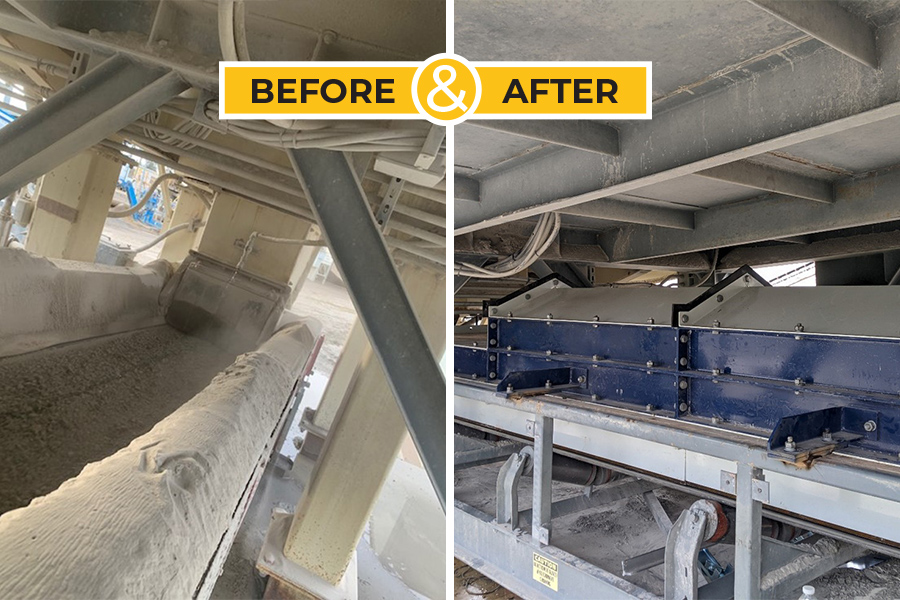
We have proudly partnered with Benetech to reduce respirable crystalline silica exposure.
Recent regulatory changes to OSHA 1926 CFR-1153(d)(1) have reduced the PEL (permissible exposure limit) to 50 micrograms of respirable crystalline silica per cubic meter of air (ug/m3) averaged over an 8-hour day. The danger of silicosis in workers exposed above the allowable PEL is real and must be addressed. Within the past year, MSHA has also announced new regulations with additional field support to enforce tightening dust control guidelines.
In collaboration with NIOSH (National Institute for Occupational Safety and Health, a division of the CDC), Benetech took the challenge combining their proven products with newly patented technologies to design equipment that would improve personnel safety in the workplace and reduce exposure to RCS (respirable crystalline silica).
During development of the MaxZone Safe+®, Benetech greatly benefited from NIOSH’s R&D (research & development) team by their documentation of test results showing a significant reduction in dust and spillage at the load zone areas of the conveyor system.
Targeting the load zone area of a bulk material handling system is critical since up to 85% of the dust and spillage occurs in the transfer point and load zone areas. This is also the area where the highest incidence of serious injuries and fatalities occur during routine maintenance and cleanup operations. Personnel exposure to respirable dust is also very high in these areas.
In addition, the economic advantages of this technology allows for minimal use suppression to be employed on an “as needed” basis due to “smart” data communications between devices. And chemical costs can be minimized with an average savings of over 60X when compared to other spray suppression systems available.
Through our partnership with Benetech, we are experts at dust and spillage control, material flow, and production done safely with reduced downtime. Contact us and see how our integrated services and technologies can help improve your operation by reducing dust, preventing spillage, improving material flow, and ensuring compliance.
Safety, Reliability, Mechanical Integrity…important buzz words in the production of H2SO4 and any chemical processing plant. This editorial aims to investigate how we can proactively recognize areas of potential risk when incorporating flex hoses into modern plant operations. We’ll explore strategies to minimize these risks during the design and planning stages.
It All Begins with The Reliable Handling of Molten Sulfur
Sulfur is the key raw material in the industrial production of sulfuric acid using the contact process. Solid sulfur is placed into a heated vessel where it’s brought to the melting point (115°C) and converted into a liquid state. The molten sulfur is then stored in a heated tank to keep it in liquid form before being pumped to the combustion furnace. The temperature of the molten sulfur is usually maintained between 130°C and 150°C. The pressure required to inject molten sulfur into the combustion chamber typically ranges from 2 to 10 bar (approximately 29 to 145 psi), depending on the specific design of the injection system, the viscosity of the molten sulfur, and the desired atomization quality.
Maintaining Temperature During Transfer
Heat traced flex hoses are commonly designed into the system to maintain the temperature during pumping to ensure it remains in a fluid state and at the proper viscosity. Full penetration welds are imperative to contain the high pressure required to achieve the proper flow rate. These flex hoses are typically fabricated from 316SS and are thoroughly pressure tested and incorporate 100% radiography to ensure the integrity of the welds. This carefully controlled programmatic approach helps ensure the safe and efficient transport of molten sulfur from storage to the injectors.
Inherent Risk
Flex hoses, like all critical process equipment, while essential in almost all chemical production sites, can pose certain risks if not properly designed, manufactured, installed, and maintained. Some of these considerations include:
Improper Design
Risk: If a flex hose is not properly designed from detailed specifications that are documented and signed off by the involved parties, reliability is likely to be compromised.
Impact: Failure modes can include any number of physical breakdowns as well as improper temperature and related viscosity troubles that can readily shut down the process.
Material Compatibility Issues
Risk: Not all flex hoses are compatible with all concentrations of sulfuric acid. Using the wrong type of hose material can lead to rapid degradation.
Impact: This increases the likelihood of hose failure, posing a significant safety hazard in a sulfuric acid production environment.
Improper Installation
Risk: Incorrect installation, such as improper bending radius, inadequate support, or incorrect fitting selection, can lead to excessive stress on the hose.
Impact: This can cause premature wear, kinking, or failure of the hose, increasing the risk of leaks or bursts.
Mechanical Failure
Risk: Flex hoses are subject to mechanical stresses, such as vibration, pressure fluctuations, and thermal expansion. If a hose is not properly rated for these conditions, it can rupture or fail.
Impact: A sudden failure could cause a spill or release of materials, which could result in serious injuries or damage to surrounding equipment.
Aging and Fatigue
Risk: Over time, flex hoses can degrade due to continuous exposure to high temperatures, pressure, or corrosive substances.
Impact: If hoses are not regularly inspected and replaced as needed, they can become a weak point in the system, leading to potential catastrophic failures.
Fire Hazard
Risk: In certain situations, if a flex hose fails and releases volatile substances, it can potentially contribute to fire hazards, especially if there are potential ignition sources and/or other combustible materials nearby.
Impact: A fire in any chemical plant could have devastating consequences, including the release of toxic fumes.
Risk Mitigation Strategy Begins with a Robust Hose Program
Documented Design Criteria: Proper design of flex hoses can be an iterative process. Required operating parameters should be documented and submitted to the Application Engineer(s) for their input on materials, configuration, and end connections. These are then returned to the customer for consideration and final approval.
Pressure and Temperature Ratings: Ensure that the hoses used are designed and rated for the specific pressures and temperatures encountered in the sulfuric acid production process.
Material Selection: Ensure that the flex hoses are made from materials specifically designed to handle sulfuric acid and its associated gases.
Robust and Reliable Production: The production of heat traced hose assemblies for critical process applications requires the use of tried and true techniques that have been proven over time. Full penetration welds that are challenged with 100% radiography for their integrity are non-negotiable.
Pressure Testing Requirements: Flex hose assemblies should be safely pressure tested prior to shipment from the manufacturer according to predetermined specifications.
Proper Installation: Follow manufacturer guidelines for installation, including proper bending radius, support, and fitting selection.
Regular Inspections and Maintenance: Predetermine and implement a routine inspection and maintenance schedule to check for signs of wear, corrosion, or mechanical damage.
Routine Replacement Schedule: Hoses should be tagged for identification and replacement schedule. First and foremost, of course safety is paramount in any operation. Reliability and mechanical integrity are aimed at achieving this goal. A safe operating environment means the operation has been carefully planned and every detail thought through in advance.
Adhering to a rigorous design and selection process for all your flex hose applications is crucial for ensuring the reliability, mechanical integrity, and safety of your process, ultimately leading to uninterrupted operations and production.
Branham Industrial has developed their hose design and production process over the last 50 years. For more information contact John Czerwinski jczerwinski@branhamcorp.com (502) 649-4929
Sulfuric Acid Today full issue: https://h2so4today.com/2024-fw-2